
The Tanker’s Method – Learn Building an Unstoppable Foundation for Life and Leadership from Stanley Slaczka
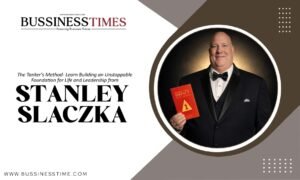
Stanley Slaczka succeeded because he persevered, always. On the battleground, in the field, in the Army, as well as in his authorship-powered civilian life, Stanley Slaczka grasped the secret of success. That secret was, “Perseverance! How do I get perseverance? What do I do to get perseverance? Where should I start to get you started? I am going to give you the tools to have perseverance! Writing things down is your first tool. Your surroundings are as important as writing things down. That is your second tool. Eating healthy is your third tool. Your fourth tool is thinking triangularly,” writes the award-winning author Stanley Slaczka, in ‘The Structure of Perseverance,’ which is one of his many bestselling and award-winning books.
Stanley Slaczka learned the art of perseverance in his over three and a half decades of service in the US Army. In his civilian life, he is an accredited author with a collection of award-winning books that engage and inspire readers. In his own words, his fierce books are crafted from his lifelong experiences, ensuring that they are not only erudite but also impactful.
How to Become a Successful Leader?
Further defining leadership success, Stanley Slaczka says that you got to visualize yourself as a leader. “The equation I am giving you will put you on top of the whole picture, making you a producer of information, putting you in charge. We are all leaders in a way; it’s how proactive you are.” If you read his book ‘The Structure of Perseverance,’ and do what is in his book, you will have better visualizations and will become more proactive. His book will help you “Be All You Can Be!” You will establish a new focus, and his book shows you how to have multiple focuses! “How are we going to think more clearly? The answer is within my book; my book will make you an elite force!” he claims.
That claim is substantiated by leaders across sectors who found the book resonated with them. It is because the book ‘The Structure of Perseverance is grounded in Stanley Slaczka’s real-life experiences. He recalls that in the military, all they do is drill into your head pay attention to detail. “And I started to wonder why they want us to pay attention to detail. They say they want us to complete our missions. I started to figure out what is stopping us from completing our missions.” They give you the tools to spot these things, but nobody takes the time to write them down. Stanley Slaczka realized he had a skill to spot flaws in things. When he started to spot these flaws, it became very alarming; “Even our leaders don’t have perseverance! Our leaders aren’t completing missions. What is in our environment is so important; it is what drives us,” he insists.
Founding the Foundation
In an age where many people chase instant results and quick wins, Stanley Slaczka points back to the basics. He believes that the strongest foundation a person can have is not found in a sudden outcome but in a deliberate equation for life. Drawing from his history as a highly trained tanker, he teaches that a leader must be the center of their own world. By building a solid base, you begin to figure out the obstacles that stop others in their tracks. Stanley Slaczka views his system as a way to put a person at the very top of their field. It is a process that requires the discipline of a soldier but is meant for anyone who wants to be the primary producer of their own success.
One of his main goals is to bring these lessons to younger people. He realized that if the youth are taught this structure early, they can reach their goals at a much faster pace. This system creates a high level of confidence because it allows you to see exactly what you are up against. When a person can map out the landscape of their challenges, the fear of the unknown disappears. Stanley Slaczka insists that structured thinking is not just for the battlefield; it is the most practical tool for navigating professional and civilian life. It turns a person into a proactive force rather than someone who simply reacts to the world. “A leader must be solid. My system is designed to fill in the gaps and make you as sturdy as a tank. When you are totally solid, you start to see solutions that were once unimaginable. It is a total game changer for how you view your life and your work.”
Overcoming the Flaws
Stanley Slaczka identifies a common blind spot in leadership: the failure to focus on the self. He suggests that becoming an elite leader starts with the internal foundation. His training by elite tankers taught him that being unstoppable is a matter of preparation. He explains that leadership in 2026 is constantly tested by rapid change, but timeless principles still rule. To survive uncertainty, he believes a person needs to reshape their identity and ego through a new lens. He breaks down the environment into pieces so that it can be understood and mastered. By simply identifying the flaws in your surroundings, you have already begun the work of overcoming them. “Tankers know how to be powerful because they understand their environment. If you can spot the obstacles in your path, you become unstoppable. It all starts with having the right tools to see what is really there.”
The Hands-On Approach to Success
As a maintenance technician and a hands-on individual, Stanley Slaczka ensures his writing is far more than just inspiration. He understands that flaws in a system or a mindset can have real consequences. His books are crafted to be practical guides that help people spot the specific things that prevent them from completing their missions. He teaches that an elite force is built through attention to detail and a refusal to let the environment drive your decisions. Instead, you must drive the environment. By establishing multiple focuses and thinking with clarity, you gain the power to lead in any sector.
The impact of his work is seen in the resilience of those who follow his methods. He continues to advocate for a lifestyle where writing things down and staying physically healthy are non-negotiable parts of the leadership journey. For Stanley Slaczka, the mission is never truly over; it is a continuous cycle of spotting flaws, building strength, and moving forward with a sense of purpose that is as heavy and certain as the armor on a tank.
Building an Ethical Environment
For Stanley Slaczka, ethical leadership is not a passive trait but a skill that must be trained and passed down. He draws from his time in the Army to explain that a leader’s primary duty is to transfer good ethics to everyone in the organization. He believes that if those at the top do not prioritize doing the right thing, the rest of the team will quickly follow suit. To prevent this, he suggests using visual tools and regular meetings to illustrate what it looks like to be ethical in daily practice. He advocates for structured classes on topics like sexual harassment to create a safe and positive setting. By teaching people to follow the rules, a leader builds a sense of order that naturally raises the morale of the entire group.
When people care about their work and feel supported, the entire office becomes more jovial and capable of handling stress. Stanley Slaczka encourages leaders to build a culture where employees openly tell one another they are doing a good job. This positive reinforcement creates a vision of what a healthy workplace should be. He insists that hiring the right people—those who truly care about the mission—is the first step in making sure the rules are followed. By setting a high standard and providing clear diagrams for behavior, a leader ensures that convenience never overrides the core values of the business.
The Source of Positive Energy
Personal resilience and empathy both grow from the same place: a strong foundation. Stanley Slaczka teaches that when a leader builds a sturdy mental base, they naturally project positive energy that others can see. This energy is a signal to employees that their leader is caring and approachable. He often points to physical health as a key part of this equation. Eating healthy and maintaining a strong body are the building blocks for a mind that can stay human-centered even during difficult times. He even suggests that the physical environment, such as what is hanging on the walls of a business, plays a role in keeping the team focused and calm. “I am a Tanker, and I am trying to give you a foundation that lasts. When you are a healthy person, your energy changes. Your employees will notice that you are solid, and that creates a space where everyone feels they can succeed.”
Training the Brain Muscle
Stanley Slaczka views the brain as a muscle that requires regular workouts to gain stamina. He believes that leaders must push themselves to their limits at times to grow. Physical exercise is one of his favorite tools for releasing stress and staying sharp. He notes that the specific terrain of an office or a project will dictate what a person needs to do, but being in top physical and mental shape will always put a leader ahead of the pack. Self-reflection is part of this training, allowing a leader to pause and ensure their foundation is still holding strong. “If you focus on the foundation of yourself, you will be unstoppable. It takes stamina to stay out in front. You have to work out your mind just like you work out your body to handle the challenges of 2026.”
By treating leadership as a discipline of both the body and the mind, Stanley Slaczka continues to show how to build an elite force in any industry. He remains a hands-on guide for those who want to be more than just a boss. His story is one of constant self-improvement and a dedication to the tools that keep a person solid in an uncertain world.
Leading Through Life Situations
In the eyes of Stanley Slaczka, the true measure of a leader is not found in a fancy title or a trophy on a shelf. Instead, the real indicators of success are found in the morale of the team and the quality of their surroundings. He believes that a leader must look at the physical and social environment to understand the health of their organization. When a leader shows genuine concern for the setting where people work, it sends a clear message that they care about the human beings within it. Good communication and a sense of chivalry are the markers of a healthy culture. If the leader provides a strong structure, the employees will build their own strength upon it.
Stanley Slaczka views the environment as a mirror that reflects the status of a group or even a whole country. He encourages leaders to pay attention to what people are watching and what fills their daily lives. By understanding these external forces, a leader can better navigate the challenges their people face. This level of awareness allows for a more compassionate approach, where problems are accommodated before they turn into failures. For Stanley Slaczka, the path is simple: there is only one direction, and that is forward.
A Legacy of Strength
As one of the top leaders redefining success in 2026, Stanley Slaczka offers a message of empowerment. He sees his work as a way to give others the tools he mastered during his years as a tanker. He believes that his system can solve many of the hurdles that modern leaders face by helping them see the hidden challenges in their kids’ and employees’ environments. “Give yourself the chance to become a stronger leader. When you see the challenges others are facing, you can help them better. My goal is to make you solid so you can lead your people to victory.”