
Navigating Economic Turbulence: A Comprehensive Guide to Inflation Impact 2026 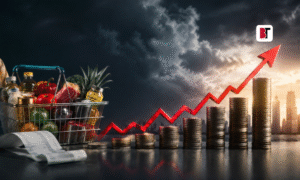
Out here, money rules are changing fast – families and companies now face a tangled situation they didn’t expect. Because of broken supply lines, wars stirring up tension, also rising fuel bills, old guesses about steady growth fell apart. People who spend and firms that invest now walk through a world where prices jump without warning, so handling cash wisely has become unavoidable. The challenges associated with inflation impact 2026 are becoming increasingly visible across global markets. When things shift this much, planning ahead quietly becomes the only way forward.
Right now, money feels different because prices keep shifting while companies try to stay profitable. Picture this: central banks adjust rates just as households feel the squeeze on everyday spending. When wages lag behind inflation, budgets tighten without warning. Profits dip when costs rise faster than sales can follow. These forces collide quietly but reshape decisions behind the scenes. The broader inflation impact 2026 can be seen in both consumer and corporate behavior. What happens next depends less on forecasts, more on real trade-offs people start making. Choices around saving, borrowing, even working change without fanfare. Watch for small signs – like delayed purchases or quieter hiring – not dramatic headlines. Each piece connects, whether it seems obvious or not.
The Pressure on Daily Household Spending
Out here, prices on basics like food, fuel, and home utilities hit hard every single month. Commodity costs climb – that pushes overall inflation higher across countries. Buying what people need daily gets tougher as money loses value fast. The effects of inflation impact 2026 are particularly noticeable in essential household expenses. Some jobs offer more pay when hiring’s tough. Still, most incomes lag behind expenses that just keep growing.
Out here, money meant for fun stuff keeps shrinking. Paying for rent and groceries means saying no to vacations, eating out, or nice things – that shift hits harder each month. People living on pensions or steady but small incomes? They’re stuck, because when prices jump, there’s no backup plan. The continuing inflation impact 2026 has made financial planning more difficult for many households. Juggling bills takes more attention now, with every dollar tracked, choices made slowly, carefully.
Corporate Challenges and the Shift in Business Strategies
For the business community, navigating the current economic landscape involves balancing soaring input costs against consumer price sensitivity. Manufacturers and retailers face steep increases in raw materials, transportation, and labor. Companies that heavily rely on imported components are particularly vulnerable, as shipping bottlenecks and shifting trade dynamics compound production expenses. The business response to inflation impact 2026 continues to evolve as market conditions remain uncertain.
To protect profit margins, many enterprises are altering their operational playbooks. While some firms pass expenses directly to consumers through incremental price increases, others utilize subtler tactics like shrinkflation, where product volumes decrease while prices remain steady. Furthermore, businesses are reevaluating their logistics networks, shifting away from extended global supply chains toward localized sourcing to insulate themselves from unpredictable international market shocks. These adjustments are direct responses to the ongoing inflation impact 2026 affecting profitability.
Monetary Policy Reactions and Tighter Credit Conditions
Central banks find themselves in a precarious position as they attempt to curb persistent price pressures without triggering severe economic recessions. Monetary authorities have been forced to extend periods of elevated interest rates, reversing prior market expectations of swift rate cuts. This sustained hawkish stance aims to cool demand and anchor long-term price expectations. Policymakers continue monitoring the broader inflation impact 2026 before making major rate decisions.
For the average borrower, these high policy rates translate directly into stricter lending environments. Credit cards, auto loans, and mortgages have become significantly more expensive, cooling speculative real estate markets and slowing down major capital expenditures. Aspiring homeowners face steeper barriers to entry, while existing variable-rate borrowers face mounting debt servicing costs. Consequently, preserving a strong credit profile and minimizing high-interest debt have become paramount priorities amid the challenges of inflation impact 2026.
Investment Realities in a Changing Financial Era
Traditional investment portfolios are experiencing heightened volatility as asset classes adjust to higher discount rates. Fixed-income instruments, such as long-term bonds, face valuation pressures when yields rise, requiring investors to favor shorter-duration options. Meanwhile, the equities market exhibits clear divergence, with capital migrating toward resilient companies that possess strong pricing power and robust cash flows.
In this environment, standard passive investing strategies may yield underwhelming real returns. Diversification must expand beyond simple stock-and-bond splits to include tangible assets, inflation-protected securities, and commodities that historically thrive during periods of rising prices. Financial agility and active portfolio rebalancing are essential to safeguarding wealth against the eroding effects of currency depreciation. Investors increasingly view inflation impact 2026 as a major factor shaping long-term portfolio strategies.
Strategic Adaptation and Long-Term Financial Planning
Surviving and thriving under these persistent economic pressures requires a proactive mental shift from baseline stability to structural resilience. Relying on historical financial assumptions can expose individuals and enterprises to significant risk. Wealth preservation now depends on building flexible financial frameworks that can withstand prolonged price volatility. Successfully navigating inflation impact 2026 requires continuous adaptation and informed decision-making.
On a personal level, this involves establishing robust emergency funds, exploring secondary income streams, and optimizing tax strategies. For businesses, it means optimizing working capital, automating repetitive tasks to control labor costs, and maintaining lean inventory models. By recognizing structural economic shifts early and adjusting spending, borrowing, and investing habits accordingly, you can navigate these turbulent times with confidence and security.