
The Industrial Ecologist: How Sunil Hulsurkar Integrates ESG into Large-Scale Infrastructure Projects
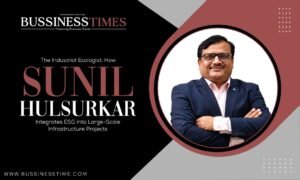
In today’s times, it is very necessary to have leaders like Sunil Hulsurkar, who understand the reality of manufacturing and the EPC sector when it comes to the requirements of modern industrial sustainability. It is essential to consider this before they attempt to change corporate environmental policies. Establishing this exact balance within the engineering and construction sector is Sunil, as the Deputy General Manager of ESG-Sustainability.
Earlier, he led the ESG and QHSE systems at Apar Industries Limited, African Industries Group, Nigeria, where he established the concept at the core and integrated them into core operations. The approach was very much adapted by the board, investors, and the operational teams in acohesive manners. He also trained and consulted various industries for the implementation and certification of Environmental, OHS, and QMS systems.
The Advisory Shift
Sunil’s deep understanding of corporate metrics expanded when he served as Director at Standardization Solutions. During his tenure, Sunil led critical consulting and training services, delivering real-world solutions in management systems implementation, ESG/Green Manufacturing, audits, supply chain development, certifications, and process improvement initiatives. He partnered with clients as a trusted advisor to align sustainability goals with everyday business operations, certifications, and stakeholder expectations. He provided strategic consulting to streamline complex workflows and reduce operational redundancies through smart system integration and value-added practices.
To ensure long-term corporate capability, he conducted extensive training programs to build internal skills in quality, environment, health, and safety management systems. He executed rigorous internal audits, detailed gap assessments, and strict compliance evaluations aligned with respected international standards like ISO 9001, ISO 14001, and OHSAS 18001. This intense advisory experience sharpened his ability to walk into any complex corporate structure and show executives how to map their financial outcomes directly to international environmental benchmarks.
The Infrastructure Future
Sunil expanded his impact by joining Kalpataru Projects International Limited in the role of an Assistant General Manager of ESG Sustainability and Integrated Management Systems. In that role, he contributed directly to large-scale sustainability initiatives and combined diverse management systems under a single operational framework.
Today, Sunil stands alongside dynamic pioneers who are accelerating progress across industries. He is committed to integrating ESG principles into complex project execution. Through his leadership, he is helping shape a future driven by resilience, technology, and forward-thinking innovation across India and beyond.
By inserting environmental stewardship directly into the early bidding, design, and construction phases of massive engineering infrastructure, his strategic choices ensure that massive power transmission lines and steel structures are developed with minimal impact on local ecosystems. As the Indian industry rapidly moves toward stricter net-zero mandates in the present times, his ongoing field assessments and integrated management practices provide corporate boards with a clear view of how large-scale infrastructure can continue to expand while respecting international environmental limits.
The Strategic Evolution
Sustainability has evolved significantly—from a compliance obligation to a reporting requirement, and now into a core business strategy, says Sunil. Today, it influences almost every aspect of an organization, including operations, supply chains, investments, product design, risk management, and stakeholder engagement. The most critical shift a leader must make is moving from a mindset of minimizing negative impact to creating positive value for society, the environment, and future generations. Climate change is no longer a distant concern; it is a business reality affecting every sector, product, and supply chain. Leaders must therefore integrate sustainability into strategic decision-making rather than treating it as a separate function. A regenerative organization does not simply consume fewer resources; it actively restores ecosystems, strengthens communities, and builds resilient supply chains. In 2026, the most successful leaders will be those who embed sustainability into the DNA of the business and align growth with long-term planetary well-being.
The Decarbonization Journey
Sunil has been instrumental in driving large-scale carbon reduction initiatives. Decarbonization is inherently a long-term journey toward carbon neutrality and net-zero emissions. It requires patience, strategic planning, and disciplined investment. However, balancing long-term ambitions with quarterly performance is possible when sustainability initiatives are integrated into operational excellence programs. Energy remains one of the most critical inputs for industrial growth. Organizations that ignore energy efficiency today may face significant financial and operational risks tomorrow, especially as energy costs and geopolitical uncertainties continue to rise. Many conventional energy sources depend on imports, making businesses vulnerable to global disruptions. His approach focuses on continuous improvement through energy intensity reduction, renewable energy adoption, and supply chain collaboration. Today, KPIL monitors key performance indicators related to energy and carbon intensity to ensure measurable progress. Simultaneously, they engage suppliers to develop and deliver lower-carbon products and solutions. This enables organizations to achieve immediate efficiency gains while steadily progressing toward long-term decarbonization goals. Kalpataru Projects obtained the latest ISO 14068 certification for international operations under its leadership.
The Global-Local Alignment
While global sustainability standards are tightening, local operational realities in India offer unique challenges, he says. At their core, global sustainability standards seek the same outcomes: cleaner environments, lower emissions,efficient resource utilization, and safer operations. While reporting formats and compliance requirements may vary, the underlying objectives remain consistent. The key is to establish a robust management system supported by technology, clear governance, and locally relevant implementation plans. Once organizations invest in pollution control, cleaner technologies, energy-efficient processes, and strong environmental management systems, compliance across multiple frameworks becomes significantly easier. In his experience, successful implementation depends on translating global requirements into practical operational actions. When teams understand the purpose behind these standards and are equipped with the right tools, global compliance becomes a natural outcome rather than an additional burden.
The Predictive Transformation
Sunil is leveraging predictive tools to move away from lagging sustainability reports toward leading indicators. The advancement of digital technologies has transformed sustainability management. Real-time monitoring systems such as SCADA, Building Management Systems (BMS), IoT-enabled sensors, and integrated software platforms allow organizations to monitor environmental performance across multiple locations simultaneously. These technologies help identify deviations before they become significant issues. By analyzing trends and predictive patterns, organizations can focus on leading indicators such as energy intensity, water efficiency, equipment performance, and emission hotspots rather than relying solely on historical reports.
Once the root causes and differentiating factors are identified, targeted interventions become more effective. This proactive approach significantly reduces environmental impacts while improving operational efficiency and business resilience.
The Closed-Loop Framework
Sunil has a unique framework for implementing closed-loop systems in manufacturing without compromising quality. Modern consumers are highly informed and increasingly receptive to sustainable products, provided quality and performance remain uncompromised. Therefore, the success of closed-loop manufacturing depends on maintaining quality while improving resource efficiency. His framework focuses on three elements: material integrity, process capability, and stakeholder confidence. They have successfully implemented reprocessing and recycling initiatives in copper, steel, and aluminum manufacturing, reducing dependence on virgin raw materials while maintaining stringent quality standards. These initiatives have lowered yield losses, shortened production cycles, and reduced environmental burdens associated with extraction and processing. When the right materials, technologies and skilled workforce come together, circular manufacturing becomes a significant value creator rather than a compromise.
The Radical Transparency
He believes in cultivating a culture of radical transparency to prevent greenwashing and ensure credible impact data. Transparency begins with trust. Sustainability data should not be viewed as a reporting requirement but as a reflection of organizational integrity. The most reliable outcomes emerge when employees, contractors, communities, and management share a common understanding of the purpose behind sustainability initiatives. He encourages teams to focus on accuracy, accountability, and openness. Clean and safe operations benefit everyone—from workers and communities to investors and customers. When stakeholders clearly understand these benefits, transparency becomes a shared responsibility rather than an imposed obligation. Strong governance, independent verification, and data-driven decision making ensure that sustainability claims are credible, measurable, and defensible.
The Resilience Metrics
There are metrics that best demonstrate that sustainability drives long-term financial resilience, says Sunil. He adds that one of the biggest misconceptions is that sustainability is a cost center. In reality, sustainability is a risk management and value creation strategy. The metrics he finds most compelling include energy intensity reduction, avoided energy costs, waste reduction, water productivity, incident frequency reduction, supply chain resilience, renewable energy adoption, and productivity improvements. These indicators directly influence profitability, operational continuity, and business competitiveness. Many traditional cost models overlook hidden costs associated with inefficient energy use, environmental incidents, resource scarcity, and reputational risks. Investments in renewable energy, safer workplaces, and responsible business practices often deliver long-term financial benefits that significantly outweigh the initial capital expenditure. In today’s business environment, sustainability investments should be viewed as essential modernization efforts rather than discretionary expenditures.
The Shared Responsibility
Fostering a sense of shared environmental responsibility across departments is one of the most important aspects of sustainability leadership, feels Sunil. He shares that throughout his 27-year career, he has used technical and management expertise to influence decisions. Sustainability, however, has taught him that lasting change occurs when they connect with people’s values rather than only their logic. Across departments—whether finance, supply chain, marketing, or operations—they are ultimately working with individuals who care about their families, communities, and future generations. When sustainability initiatives are aligned with business value and personal purpose, engagement increases significantly. He believes organizations should evaluate environmental outcomes alongside traditional business deliverables. When sustainability becomes everyone’s responsibility rather than the responsibility of a single department, meaningful transformation becomes possible.
The Disruptive Readiness
Also, he is ensuring that infrastructure and supply chains are ‘Sovereign-Ready’ for future climate and regulatory disruptions. The signals are clear, and organizations have already been given sufficient warning about the impacts of climate change. Delaying action only increases future risks. Their strategy is based on proactive planning, stakeholder collaboration, and innovation. They regularly engage machinery suppliers, consultants, technical experts, and business partners to evaluate emerging risks and identify resilient solutions. We also encourage pilot projects and controlled experimentation to validate innovative technologies before large scale implementation. Organizations that invest today in resilience, adaptability, and low-carbon infrastructure will be significantly better prepared for future regulatory and environmental shifts.
The Context of Knowledge
The next generation possesses remarkable access to knowledge and technology, believes Sunil. Artificial Intelligence has democratized information and accelerated learning opportunities. His role as an experienced professional is not merely to transfer knowledge but to provide context, perspective, and purpose. Sunil encourages young professionals to challenge conventional thinking, embrace innovation and continuously seek improvement. At the same time, it is important to share lessons learned from experience so they can avoid unintended consequences and make balanced decisions. The future sustainability leader must combine technical expertise, business acumen, digital fluency, and ethical judgment. Developing this combination is one of the most important responsibilities of today’s leadership.
The Strategic Legacy
In 2026, Sunil shares one of his most rewarding achievements. It has been leading energy management initiatives that delivered more than 10% energy reduction across manufacturing operations. Beyond the measurable savings, these initiatives demonstrated that sustainability can strengthen business resilience during periods of energy uncertainty and geopolitical tension. His strategic inputs have enabled the organization to build capacity in renewable energy generation and water conservation projects at manufacturing plants, project sites, and the community level.
His expertise has led to safer and cleaner product design, including Life cycle assessment, CBAM compliance, and achieving carbon-neutral operations.
The broader lesson is that organizations must proactively reduce dependence on vulnerable energy sources and build more resilient, efficient, and sustainable systems. “If my contribution helps industries view sustainability not as compliance, but as a strategic driver of competitiveness, resilience, and long-term value creation, that would be the most meaningful legacy I could leave behind,” he concludes.