
Mike Stevenson: Bringing the Hidden Assets of Human Potential to Light
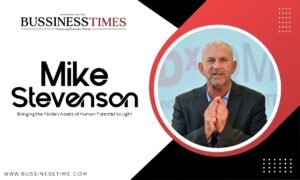
Through Storytelling, Speaking and Practical Workshops, Mike Helps Leaders and Teams Listen Differently, Involve Overlooked Voices and Create Meaningful Change.
Organisations can spend years trying to improve performance while overlooking the people who understand their problems most closely. The cleaner who sees what a hospital misses, the tenant who understands a housing problem, or the frontline worker who knows where a policy fails can hold answers that rarely reach the people making decisions.
Mike Stevenson has spent much of his life asking what happens when those voices are finally heard.
His understanding of overlooked potential began early. At 15, he was expelled from school, and at 16, he left home. He became a street sleeper, busked on the streets of Dublin, worked as a steelworker, served as a union representative and worked in the community. Those experiences taught him how quickly people can be defined by circumstances, and how much ability can sit beneath a label.
Years later, Mike earned an MBA, built Design Links and created Thinktastic, an award-winning creative business that worked with major businesses and public bodies. Over the decades, he has helped people rethink leadership, public services and the places they share.
Today, as an Edinburgh-based speaker and creative facilitator, Mike brings those lessons into talks and workshops. He asks leaders to consider who is missing from the conversation, whose knowledge has been overlooked and what small change could begin within a week. For him, communication matters when it gives people the courage and authority to act.
That conviction has now found another form in Hidden Assets, his book in development. The book takes the idea into schools, workplaces, housing, health and communities, asking what becomes possible when people who have been overlooked are given another look, and when assets mistaken for liabilities are recognised for what they can contribute.
Mike has lived many different lives. Together, they have given him one enduring belief: human potential is our greatest underused asset.
Finding a Voice
Communication can change the way people enter a conversation. The words used, the people invited to speak and the space given to different experiences can all affect what a group is able to understand about itself.
Mike found his voice with a guitar on the streets of Dublin, then learned to use it for others as a union representative and community worker. He saw how a single change in language could change who was invited into a conversation. A person dismissed as difficult might become the person who understood the problem best.
He began speaking because he had seen too much talent buried beneath hierarchy, routine and low expectations. A speech cannot repair an institution by itself. It can make people see their part in it differently and give them the courage to start. He wants people to leave with a question that follows them home: who have we failed to notice?
He has learned that communication works best when it creates room for people to answer that question themselves. A leader may enter the room with a polished account of what is wrong and leave having heard a cleaner, a tenant or a young employee describe a solution that was there all along.
That question of who gets noticed also became important in the way Mike came to understand teams and what allows people to contribute more fully.
When a Team Becomes More Than Its Tasks
A team can complete everything expected of it and still miss something important. The difference can come from whether people feel connected to the work and able to contribute what they know.
“A dutiful team completes its tasks. A purposeful team notices what the task leaves out,” Mike affirms. He remembers a housing worker who had stopped changing a lightbulb for a resident who loved reading because the policy said it was someone else’s job. He asks, “What kind of organisation employs caring people and then prevents them from caring?”
He has invited cleaners into creative sessions when others wondered why they were there, including one woman, Agnes, who simply wanted her colleagues to know her name. When people are seen and trusted, their knowledge begins to circulate, helping teams improve the experience of customers, patients, or residents while also strengthening their own performance.
He has watched older residents help design an entire village for later life, contributing their ideas on colour, safety, local commerce, and the layout of homes. Their pride was palpable because they were treated as designers of their future, and the quality of the conversation changed accordingly.
Those experiences also changed the way Mike thought about whether a speaking engagement had actually made a difference once the audience had left the room.
What Stays After the Speech
A speaking engagement has a clear beginning and end. The audience arrives, listens and goes back to its work, which makes it difficult to know what, if anything, remains from the conversation several months or years later.
Applause tells Mike what happened in the room, but he is more interested in what survives outside it, which is why he has followed up with an audience five years after a speech. In that follow-up, 82% recalled one story and its impact, while 61% recalled two stories and their impact, figures he identifies as his own follow-up results and would want supported by the survey details before presenting them as formal research. Even so, the findings reinforced something he has observed repeatedly: a vivid human story can travel through years of ordinary decisions.
The tougher measures are behavioural. Did a leader invite someone previously excluded? Did a team change a rule, a letter or a conversation? Did anyone gain agency?
Mike seeks those accounts and, where possible, returns to hear what changed, recognising that memory can carry action but is different from action itself. He welcomes being asked what an organisation will measure at three months or a year after a session. If a session starts a change, the decision should be named, someone should own it, and the people affected should be asked whether their lives are different.
That gives a speech an honest test. It also raises the harder question of what happens after inspiration, when people have to turn an idea into something they can actually do.
Inspiration to Action
A strong idea can create energy in a room, but energy alone rarely changes the way an organisation works. Action requires something more specific: a decision, someone responsible for it and enough time to see what happens.
Mike asks people to identify one unnecessary barrier they can remove, one person whose knowledge they have overlooked and one experiment they can begin within a week. He gives that experiment an owner and a date to review it. A dramatic keynote can open the door; the habits of a team decide whether anyone walks through.
In workshops, he brings different roles into the same room, including frontline staff, and works from real situations instead of polished mission statements. If an arrears letter frightens a resident, they rewrite it with the resident’s experience in mind, ensuring the communication reflects what the person is actually going through. If a policy prevents a sensible act of care, they examine the policy itself rather than allowing the rule to stand in the way.
Small changes can reveal the larger system that needs attention. His favourite question is simple: “What would we do if the person experiencing this system were sitting beside us?” It changes the temperature of a meeting. Then the organisation must give people the authority to try the answer, learn from it and share what worked.
Working with organisations in this way has also given Mike a close view of the wider problems that can prevent people from doing their best work.
Problems Organisations Overlook
Businesses often have clear measures for performance, yet some of the things that affect people’s experience are harder to put into a number. This can determine what leaders pay attention to and what they leave outside the discussion.
For Mike, the first challenge is an impoverished idea of value. Organisations count what is easy to count and miss trust, confidence, belonging and the prevention of harm. The second is the habit of hiring and promoting in their own image. The third is treating people as units of output while asking them to be creative and committed.
Businesses also have responsibilities beyond their walls. Mike admires leaders who ask whether a company can prosper while improving the lives it touches and reducing damage to the planet. Paul Polman’s leadership at Unilever helped bring that argument into mainstream boardrooms.
For him, the test is what a business chooses when its purpose costs it convenience, rather than what its annual report says. He also believes governments need the courage to consider what they avoid spending later when they invest early in dignity, education and community capacity.
Balance sheets have their place, but the things left outside them can become ruinously expensive in human terms. These questions about what organisations value also lead into the relationship between purpose, productivity and the culture people experience at work.
When Purpose Shows Up at Work
Purpose is easy to describe in a statement, but harder to recognise in the ordinary decisions people make when nobody is referring to it. The same is true of workplace culture, which often becomes visible in the small moments that form how people respond and work.
For Mike, purpose becomes real when people can point to a decision it changed. Culture is what happens when a worker spots a problem at four on a Friday afternoon. Is their initiative welcomed, or are they told it is above their pay grade? Productivity grows when people understand whom their work helps and have enough freedom to improve it.
He learned this in jobs where he was expected to work relentlessly without seeing much meaning in the work. Later, while running a creative business, he saw what happened when colleagues understood a shared aim and were trusted with responsibility.
Mike believes leaders should ask their people what gets in the way of doing good work, listen without defending themselves and remove something. That is a more credible purpose statement than any poster.
He would also ask leaders to celebrate work that exceeds a job description. Many of the people remembered most warmly did something small and humane that no performance framework requested. That is where an organisation reveals whether it really understands its purpose.
Communicating these ideas is another part of Mike’s work, particularly when he wants an audience to remember a story rather than simply remember that a speech took place.
Making a Story Stay
A memorable speech depends on what an audience feels and remembers as much as the information it receives. Stories can give an idea a human shape, while humour and vulnerability can change the way people respond to what is being said.
Mike speaks without notes, drawing from a store of lived encounters rather than a prepared script. He tries to meet people before and after a session, make eye contact, and tell stories with enough detail that the audience can stand inside them, while using humour to let the room breathe. This creates space for him to ask the challenging question that might otherwise make everyone reach for their phones.
He does not present himself as an immaculate success story. He has lost a business and a home, made mistakes and started again. Vulnerability earns the right to challenge because it says they are all in the work together.
The story should never end with him as the hero. It should leave listeners wondering what they could do tomorrow.
He thinks of the hospital window cleaners who dressed as superheroes so children could look forward to seeing them, showing how small acts can make a meaningful difference to care. A story like that widens the circle of who can improve care and stays with people because they can imagine the child at the glass. For Mike, that way of looking at people also connects with a communication problem he has repeatedly seen inside organisations: deciding who gets to be part of the conversation.
Who Gets Heard?
The people with the most formal authority in an organisation are rarely the only people who understand how it works. Someone working close to customers, residents or patients may see a problem long before it reaches a boardroom discussion.
For Mike, the quiet mistake is speaking only to the people with titles. The person who cleans a hospital window, answers a telephone or lives in a housing scheme can know something the board does not.
He once saw cleaners invited into a discussion and watched the energy change when one woman told them she wanted to be known by name.
Leaders can begin by asking, “Who is missing from this conversation?” Then they need to give those people time to speak, act on what they say and report back. Listening without a visible response soon becomes another performance.
The same principle applies to professionals who are trying to find their own voice and become more confident in how they communicate.
Stop Trying to Sound Impressive
Professional communication can sometimes become too focused on how a person sounds. When that happens, the message itself can become harder to hear, particularly when complicated language gets in the way of a simple idea.
Mike encourages professionals to stop trying to sound impressive. They should decide what they want another human being to understand, feel or do, and find a true story that makes it tangible.
He suggests telling it to one person first. Notice where their attention sharpens and where it drifts. Use words a five-year-old could grasp without making the idea childish.
Confidence grows from serving the listener, and Mike was once the child people expected little from before learning to hold a room. That transformation did not come from acquiring a grander vocabulary, but from learning to connect what he had lived with something others could recognise in their own lives.
That understanding of communication also informs what he hopes his work can contribute in the years ahead, particularly in the organisations and communities he wants to see change.
Bringing What is Already There into View
Communities already contain people, knowledge and experience that can become part of the answer to their problems. The challenge is often seeing those resources clearly enough to give them a place in what happens next.
Mike wants leaders who grow other leaders in their wake. He wants public money understood as investment in human capacity and prevention, and regeneration that lifts a community without pushing its people out. He wants companies to help repair the social and environmental conditions on which their future depends.
Scotland has made an extraordinary contribution to global thought, especially through the Enlightenment and its legacy. He wants its next great contribution to come from confronting present-day problems with the same intellectual courage.
Scotland could serve as a petri dish for many mistakes made across the West: inequality, neglected places, strained services and wasted talent. It also holds evidence, experience and people capable of designing better answers.
Mike wants Hidden Assets and his work on stage to help bring those answers into view and into practice.
The future, he believes, will be shaped by those willing to see what is already here.