
The Evolution of the BRICS Summit and a Changing Global Order 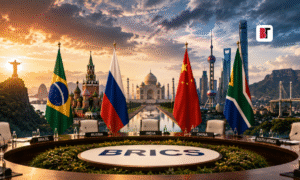
Right now, global power lines are shifting – BRICS sits right in the middle of it. Started as a term from a banker eyeing fast-rising economies, it grew teeth. When leaders meet each year, talk isn’t stuck on growth numbers anymore. These gatherings pulse with intent: building weight against long-standing Western-led systems shaping trade, money flows, and world politics. Each round pushes waves outward. Governments watch closely. So do financial watchers. Old frameworks feel pressure. The ground moves quieter than headlines say – but it moves.
More Countries Gain Influence Worldwide
Once seen as just a loose mix of countries split by politics and distance, the group now tells a different story. Lately, big meetings shifted everything – growth became real in ways once thought unlikely. Not limited to Brazil, Russia, India, China, or South Africa anymore, it stretches much further today. With major additions from West Asia, such as Iran and the UAE, along with Ethiopia and Egypt from Africa, plus Indonesia from Southeast Asia, its shape changed completely. What looked fragmented before now holds together in new form.
Now making up over four tenths of everyone on Earth, the group’s reach has quietly reshaped who holds sway in global talks. Sitting across from one another, those at the table carry not only their own nation’s needs but also vast stretches of land, labor, and raw materials. Power shifts happen without loud announcements – this cluster of countries pulls attention simply by existing together. Countries left out by older systems now look here first, drawn less by promises than presence.
Redefining the Rules of Global Finance
The most tangible disruptor emerging from the BRICS summit is its aggressive focus on financial autonomy and alternative economic infrastructure. For decades, the US dollar has reigned supreme as the undisputed default currency for international trade, giving Western nations immense leverage over global banking systems and sanction mechanisms. In response, recent BRICS summit have prioritized practical strategies for de-dollarization. Leaders are actively working to bypass standard Western channels by promoting the use of local currencies for cross-border trade and developing independent payment architectures.
Central to this economic strategy is the New Development Bank, which operates out of Shanghai as a direct alternative to the World Bank and the International Monetary Fund. Rather than forcing developing countries to accept stringent, often painful political conditions in exchange for loans, this financial arm offers funding focused strictly on infrastructure and sustainable development. By creating a parallel financial framework, the BRICS summit provides its members and a growing list of partner countries with a safety net, shield, and alternative pathway toward national prosperity.
Navigating Internal Friction and Diverse Agendas
Despite its undeniable momentum, the alliance must constantly manage the complex internal friction that comes with such a diverse membership. The summit brings together nations with vastly different political structures, ranging from vibrant democracies to centralized autocracies, alongside states that occasionally find themselves in direct geopolitical competition. Balancing the conflicting priorities of members like China and India, while simultaneously absorbing the distinct strategic interests of newer entrants, requires incredibly delicate diplomatic choreography.
However, the enduring relevance of the BRICS summit lies in its ability to focus on shared structural goals rather than identical domestic ideologies. The binding glue of the organization is the mutual desire for a multipolar world order—a system where no single nation or ideological bloc wields absolute veto power over the rest of the planet. By focusing heavily on common denominators like technological exchange, agricultural security, and equitable climate finance, the BRICS summit manages to maintain a unified front despite internal differences.
A Blueprint for the Future of Diplomacy
The shifting momentum of global influence is clearly visible as the torch of leadership passes from one member to the next. Following Brazil’s successful stewardship, India has stepped into the driver’s seat to steer the collective agenda through a world currently fractured by intense tariff pressures and deep regional conflicts. The upcoming leadership gatherings are designed around building resilience, driving digital innovation, and securing sustainable development across the Global South.
Ultimately, the BRICS summit has transitioned from a simple annual meeting into a critical platform for systemic global reform. It stands as a vivid reminder that the historical centers of economic and political gravity are shifting east and south. While the traditional global institutions must adapt to this new reality, the nations convening under the alliance are actively drafting the blueprint for a decentralized global economy. The BRICS summit is no longer just a forum for discussion; it is the engine room of a new era of international relations.