
John Ternus: From Apple Engineer to CEO
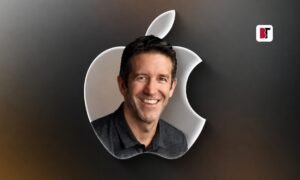
For more than two decades, John Ternus helped build the technology behind some of Apple’s most familiar products. John Ternus grew up and now John Ternus the Apple CEO is stepping into the company’s top job taking over from Tim Cook on September 1, 2026 and facing the challenge of shaping Apple’s next era.
Ternus is not a newcomer to Apple’s leadership team. He joined the company in 2001 and spent years working across hardware engineering before becoming one of its most senior executives. His background gives Apple a CEO with deep technical experience at a time when artificial intelligence, hardware development and global manufacturing are reshaping the technology industry.
Who Is John Ternus and What Is His Background?
John Ternus is a mechanical engineer who built his career around product development rather than finance or marketing. Before joining Apple, he worked as a mechanical engineer at Virtual Research Systems. He later joined Apple’s Product Design team in 2001 and gradually moved into senior hardware leadership.
Ternus earned a bachelor’s degree in Mechanical Engineering from the University of Pennsylvania. His technical background is significant because Apple’s products depend heavily on the connection between industrial design, engineering, materials and manufacturing.
By 2013, he had become Apple’s vice president of Hardware Engineering. In 2021, he joined the executive team as senior vice president of Hardware Engineering, putting him among the executives responsible for some of the company’s most important products.
How Did John Ternus Rise to Apple’s Top Job?
Ternus’s rise was gradual rather than sudden. During his years at Apple, he worked on several generations of products and helped oversee engineering teams across the company’s hardware categories.
Apple says he was instrumental in the introduction of new product lines including the iPad and AirPods, while also working across the iPhone, Mac and Apple Watch. His responsibilities expanded as Apple’s hardware became increasingly integrated with software and custom technology.
When Apple announced the succession plan in April 2026, the board’s choice reflected that long history inside the company. Apple said the transition followed a long-term succession planning process and that Ternus would join the board when he became CEO.
That makes John Ternus different from an outside executive brought in to overhaul the company. He already knows Apple’s product-development culture, engineering teams and internal decision-making process.
Which Apple Products Has John Ternus Worked On?
One of the strongest parts of Ternus’s resume is the range of products connected to his hardware leadership.
Apple has credited him with overseeing work on every generation of iPad during his career and with leading the hardware team behind the first-generation AirPods. In 2021, Apple also highlighted his role in the iPhone 12 and iPhone 12 Pro and his involvement in the transition of the Mac to Apple silicon.
What Does Ternus Bring to Apple as CEO?
Ternus brings a technical perspective to a position historically shaped by different kinds of expertise. Steve Jobs was closely associated with product vision and design, while Tim Cook became known for operations, supply-chain management and Apple’s expansion into services.
Ternus arrives with a background much closer to the engineering side of Apple’s business.
Apple has also pointed to his work on reliability, durability, materials and repairability. His leadership has included projects involving recycled aluminium, 3D-printed titanium and efforts to extend the useful life of certain products.
Those details offer a better picture of his management style than simply describing him as an engineer. Much of his career has involved turning product ideas into physical devices that can be manufactured at enormous scale.
What Challenges Will John Ternus Face as Apple CEO?
The biggest question around John Ternus is not whether he understands Apple’s hardware. It is how he will lead the company beyond it.
Artificial intelligence has become one of the technology industry’s biggest battlegrounds, and Apple faces pressure to make its AI capabilities more competitive. Reuters reported that Ternus takes over at a time when Apple is working to catch up in AI while also dealing with complex global manufacturing challenges.
He will also need to maintain Apple’s enormous existing businesses while deciding where the next major growth opportunities should come from. That means balancing established products such as the iPhone and Mac with newer areas including spatial computing, services and AI-powered features.
How Is Apple’s Leadership Changing Under Ternus?
The leadership transition also changes the responsibilities around Ternus. Before becoming CEO, he led Hardware Engineering. Apple has since appointed Johny Srouji as chief hardware officer, giving him responsibility for Hardware Engineering as well as the broader Hardware Technologies organisation. That change allows Ternus to move away from managing the company’s hardware organisation day to day and focus on the broader responsibilities of running Apple.
Why Is John Ternus’s Appointment Significant?
John Ternus, the new Apple CEO, represents continuity in one sense and change in another. He is a longtime Apple executive who understands the company’s products from the inside, but he is also taking over at a moment when Apple faces questions that extend beyond traditional hardware engineering.
His appointment means Apple has chosen someone who has spent years building products rather than someone coming from outside the technology giant. Whether that technical experience translates into success across Apple’s entire business will become clearer as his tenure develops.
What Can Be Expected From John Ternus?
The early focus is likely to be on keeping Apple’s product momentum strong while dealing with areas where the company faces competition. Artificial intelligence will be a test, but so will the development of new devices, the growth of Apple’s services, and the company’s ability to handle its global supply chain.
For John Ternus, the move from leading engineering teams to running Apple is a major change in scale. He now has responsibility not only for products but also for the company’s wider strategy, employees, investors and long-term direction.
Conclusion
John Ternus begins his tenure as Apple CEO with an unusual advantage: he already knows the company, its products and its engineering culture from more than 25 years inside the organisation.
His challenge now is to take that technical experience and apply it to Apple’s biggest questions, particularly around artificial intelligence, future products and global competition. The next phase of Apple’s story will show whether an engineer who helped build its products can successfully lead the entire company.