
The Future-Problem Solver – Kevin Eastwood: Building Global Organisations That Support Positive People by Default
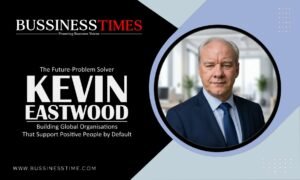
We are living in an era where technology often moves faster than the people it is meant to serve. That is why the most inspiring leaders who are driving digital transformation and human excellence are those who never forget their humaneness and understand that true progress is found in the balance between the machine powered by a human heart. Kevin Eastwood’s life has been a series of chapters that prove leadership is an act of service. Whether he is advising Global Customers that he supports in his role at Microsoft, working as an Enterprise Business Mentor (volunteer) for the King’s Trust or supporting local communities as a trustee for Paul’s Place, he carries a deep belief that systems only perform when the people within them are empowered to thrive.
Kevin’s path to the top of the digital world was anything but traditional. He began his professional life as a police constable, a role that taught him the raw reality of duty and the importance of human connection. Storing those early days on the street in his memories, he went on to build his own IT consultancy from the ground up, eventually serving over six hundred clients. From an apprentice electrician to a modern work architect, Kevin has spent four decades learning that the hardest problems are human and that reliability is a promise you keep to other people. Today, at Microsoft, he leads strategic efforts to help enterprise companies find the value in tools like Microsoft 365 and Copilot (AI). He does not just give them a software update; he gives them a roadmap for a better way to work.
A Journey from Circuits to Systems
“My career really started with the smell of warm oil in a substation on a cold morning. As an apprentice in the 1980s, I learned that reliability isn’t a feature; it’s a promise. If a system has to work, it has to work every time.” That ethic, quiet, unshowy, uncompromising, followed Kevin from the substation to the boardroom. He founded and ran an IT consultancy, owned a P&L, and later moved into enterprise architecture, large-scale onboarding, and, latterly, AI adoption. The lesson that stuck most? The toughest barriers are rarely technical; they’re human, about incentives, governance, habits, and the accumulated clutter of processes that once made sense and now waste time.
Three Moments that Reoriented His Approach
- Owning the P&L:“The first time I had to defend a technical spend to a skeptical CFO, I learned to translate architecture into balance-sheet impact and customer experience. Diagrams were useful, but credibility lived in outcomes and cash flow.”
- Leading major programmes:“Halfway through a complex rollout, it became obvious the bottleneck wasn’t the new tool. It was the old operating model roles, handoffs, and incentives pulling in different directions.”
- A mental-health crisis:“After a hard patch, I stopped running on heroics. Sustainable pace, psychological safety, and clarity of purpose aren’t nice-to-haves; they’re competitive advantages.”
A Philosophy Born from Real Experience
The strength of Kevin’s leadership comes from more than thirty years of hands-on delivery at organisations like Lloyds Banking Group, Vodafone, AstraZeneca, Marks & Spencer and within the charitable sector. He has a rare ability to simplify the complex world of AI governance and compliance, making it feel like a practical tool rather than a looming threat. By supporting board-level discussions on digital resilience, he has helped organisations improve their compliance audit scores by twenty percent. To Kevin, technology is at its best when it is harnessed safely and sustainably, always with an eye toward a greater sense of responsibility.
“Sustainable change happens when we stop looking at technology as a separate entity and start seeing it as a partner to human behavior. My journey has taught me that the most resilient systems are the ones built with empathy and a deep understanding of the people they support.”
Resilience and the Power of People
Kevin’s perspective was forever changed by a personal chapter involving his own mental health. This experience did not hinder him; instead, it deepened his resilience and gave him a unique brand of empathy that he brings to his executive coaching. He helps leaders think clearly and challenge their own assumptions, creating a culture where it is safe to grow. His work as a board advisor and non-executive director is rooted in the idea that long-term value is created when a company aligns its digital programs with its core values and social responsibilities.
When he is away from the boardroom and the cloud, Kevin finds his balance in the quiet of the countryside. He values long walks and the time spent with his family, including the immense pride he feels as a great-grandparent. This grounded nature allows him to return to work with a clear head, ready to turn difficult problems into simple, practical solutions for the world’s most complex organisations.
What Transformation Really Means
Kevin tells boards that transformation is less about the new tool and more about how technology actually changes. “If the sales proposal still takes twelve emails and a week of chasing, you didn’t transform; you just bought software. The wins come when we redesign the steps and the roles, then let technology do the heavy lifting.”
He frames the work through three lenses that move together:
*Value and outcomes; a small set of measurable results the board cares about.
*Human experience; making the right behavior the easy behavior through simpler processes, clearer roles, and real skills uplift;
*Control and trust; building security, compliance, and risk management into design choices from day one. When these lenses align, tools stop being projects and become capabilities.
The Near Future of Work: Three Forces
Kevin says that sometimes, the narrative must return to the old school of questions and answers. In that style, he answers three crucial questions of our times.
What do you mean by “AI as a teammate”?
“Tools are optional; teammates change how you structure work, share context, and measure contribution. The question isn’t whether AI drafts the first version; it’s how the workflow, controls, and decisions change because AI is in the loop.” The organisations that win will govern AI as a core capability: clear use-case portfolios, quality controls, data stewardship, role redesign, and metrics that reflect human AI collaboration, not speed for speed’s sake.
What does ‘trust by design’ look like in practice?
“Trust is now part of the product.” Treating security and compliance as late-stage checkpoints creates delays and, ironically, more risk. Designing trust in from day one means pre-approved architectures, automated guardrails, transparent reporting, and faster time to value.
How will collaboration norms evolve?
Expect more asynchronous, outcome-led collaboration. I argue for written decision briefs instead of sprawling status meetings, findable knowledge bases, protected focus time, and metrics that track decision velocity and outcome progress, not meeting counts. “Fewer heroics, more systems.”
Four Behaviours that De-Risk Big Programmes
- Clarity of purpose:every workstream can name the outcomes it serves and how success is measured is kept visible on a simple scoreboard.
- Psychological safety with accountability:teams surface risks early, challenge assumptions, and can say “we don’t know yet” without penalty. Early truth is cheaper than late surprise.
- Disciplined decision practice:clear owners, regular forums, published service levels for decisions, and a single source of truth for what was decided and why.
- Evidence over opinion:hypothesis, pilot, telemetry, then scale or stop.
Turning Strategy into Roadmaps People Can Follow
Many strategies fail not because they are wrong but because they are illegible to the people who must execute them. Kevin relies on a simple chain: outcomes → capabilities → workflows → adoption. Agree the scoreboard (e.g., reduce cycle time by a specific percentage); translate outcomes into the capabilities the organisation must develop (for example, secure external collaboration and governed knowledge reuse); redesign workflows at the moments that matter (how a sales team builds a proposal, how an operations team handles exceptions); and fund adoption as a first class workstream, sponsorship, change networks, role-based learning, targeted communications and coaching.
Where Transformations Stall and How to Unlock Them
Post-mortems often cite governance, skills, legacy technology, or culture; Kevin’s diagnosis is blunter: misaligned incentives often hide behind those labels. To unstick progress, convert positions into tests. Shift governance from gates to guardrails with pre-approved patterns and lightweight design reviews; embed skills uplift in real work through pairing, communities of practice and coaching; manage legacy estates by isolating them and retiring step by step so benefits arrive early; and reshape culture by changing rituals, open demos, visible decision logs, meeting-light weeks and short written briefs that make reasoning auditable.
Bringing the Board into the Room
Enterprise change lives or dies on stakeholder alignment. At the C-suite and board level, Kevin anchors conversations on three lines: why now, what good looks like, and how we’ll prove it. Why now frames the value at stake and the cost of inaction; what good looks like sets an aspirational definition for customers, colleagues, and regulators; how we’ll prove it lists outcome metrics, audit friendly controls, and decision checkpoints. He also emphasises that role clarity, sponsor, accountable owner, and advisor are not the same, and maintains a living decision log to keep oversight transparent and repeatable.
From “Pilot Theatre” to Scaled Innovation
Many large organisations have pilots that succeed but never grow beyond the trial. The antidote is routines, incentives, and leadership behaviours that value quick learning over ceremony. Create regular forums where teams show working software or updated processes; hold monthly reviews where leaders decide to discontinue or expand based on evidence; and reward those who eliminate unnecessary tools or surface risks early, not just those who ship new features. “I’d rather fund a team that kills a zombie tool than one that adds a shiny new one.”
Rethinking Performance: A Mental-Health Lens
Kevin speaks openly about two significant periods of mental-health challenge and how they reshaped his leadership. “I stopped treating recovery as private and made it part of how my teams work,” he says. “Weekly focus blocks, written context so people can switch off, and clear goals so progress is visible without late-night heroics.” For him, sustainable performance means showing up consistently, valuing steady progress over intense bursts, and building systems that support positive behaviours by default.
What a Healthy, High-Performance Culture Looks Like
A healthy, high-performance culture runs on clear policies, capable managers, and honest metrics, not just atmosphere. Policies that reduce friction (meeting-light norms, transparent hybrid guidelines, accessible knowledge bases, privacy-minded analytics); managers who coach, design manageable workloads, and push back on low-value tasks; and metrics that reflect reality outcomes, decision speed, early risk detection, depth of adoption and wellbeing.
Closing the Loop
“If there’s a thread through my career, it’s this,” Kevin says. “Agree on what matters, decide well, and look after people while you chase ambitious goals. Get that right and technology becomes an amplifier; get it wrong, and you’ll have the fanciest tools in the world solving yesterday’s problems.”