
The Operational Catalyst: How Riyaa Roshan Drives Enterprise Synergy Across Capital Ecosystems
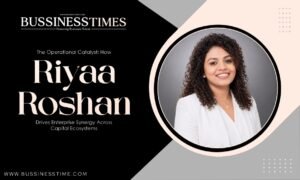
Operations and human resources leaders are the people empowerees and boost performance when it comes to the realm of complex holding ecosystems, modern regional enterprises, and the world of fast-paced corporate environments. As the Director of Operations at Sterling Ark Holdings, Riyaa Roshan has emerged as one of the topmost amidst that league of leaders who treat talent development as a primary engine for regional expansion. To the Middle East and Indian corporate landscapes, she brings this exact forward-thinking philosophy.
Over the course of nearly two decades, she has collaborated with corporate boards to align people strategies with business priorities, creating high-performing, resilient organizations.
Her leadership journey spans nearly two decades across diverse industries, where she has held senior HR and executive leadership roles in India and Middle East. Recognized for aligning people’s strategy with business priorities, she has led large-scale organizational transformation, strengthened leadership capability and built high-performing cultures that enable sustainable growth.
The Performance Optimization
Riyaa expanded her corporate impact significantly upon joining Colliers, where she initially managed massive human capital requirements as the Associate Director and Talent Acquisition Head. Later, her strategic choices steered the overall people operations for the real estate giant. She designed agile recruitment frameworks and performance systems that turned traditional HR departments into vital centers of commercial strength. By focusing heavily on internal promotion, transparent evaluation systems, and structured skill development, she ensured that the bank of corporate talent remains ready to handle shifting property market trends.
Now, as the Director of Operations at Sterling Ark Holdings, Riyaa applies her immense talent management background to direct corporate strategy, asset optimization, and process engineering. She merges technical workflows with human resources to eliminate corporate drag and maximize output across diverse investment branches. By replacing old silos with collaborative pathways, she ensures that every company under the corporate umbrella moves in total sync with market opportunities.
Throughout her journey and especially in the present, she stands highlighted among key visionary corporate minds across India and the Middle East. In her role, Riyaa focuses on building open corporate cultures that value true merit and clear communication. She aligns everyday team behavior with international commercial expectations, helping regional offices maintain an edge over traditional market competitors. By establishing modern human resource policies that encourage cross-functional teamwork, her ongoing work leaves the horizon entirely open for international organizations to watch how strategic people management drives consistent commercial success.
The Strategic Evolution
Encompassing human capital, organizational transformation, and now operations leadership, her career evolution has been intentional, starting in human capital with a strong focus on people, culture, and performance. Over time, Riyaa recognized that true impact lies in integrating people strategy with business and operational outcomes, which led her into organizational transformation and now operations leadership. This journey has shaped her leadership philosophy to be both people-centric and outcome-driven. She believes in aligning people, purpose, and performance, while building agile, accountable, and future-ready organizations where business success is a natural outcome.
The Cultural Intelligence
Working across India and the Middle East has reinforced that while cultures differ, respect, clarity, and trust are universal leadership currencies. One of the key lessons has been the importance of cultural intelligence, understanding local nuances, communication styles, and what motivates teams in different contexts. She’s learned to lead with adaptability, balancing global standards with local sensitivities while ensuring alignment on shared goals. Building inclusive environments where diverse perspectives are valued has consistently driven stronger outcomes. Ultimately, effective leadership across geographies is about listening deeply, communicating with intent, and creating a sense of belonging, so teams can perform at their best regardless of where they are.
The Operational Focus
As Operations Director, today, her priority is to build a high-performance organization where strategy translates seamlessly into execution. This includes strengthening operational frameworks, enhancing process efficiency, and ensuring clear accountability across teams. She is equally focused on building organizational capability, investing in talent, fostering a culture of ownership, and using technology to drive smarter, data-driven decisions. The goal is to create a scalable, agile organization that consistently delivers excellence.
The Workforce Transformation
Workforce transformation requires aligning people, processes, and performance around a clear business vision. She focuses on building structures that connect talent strategy with operational goals, ensuring clarity of roles, accountability, and measurable outcomes. Equally important is enabling adaptability, upskilling talent, strengthening leadership pipelines, and embedding a performance-driven culture supported by data and technology. Long-term success comes when organizations treat transformation not as a one-time change, but as a continuous, integrated way of working.
The Unified Ecosystem
Riyaa has often emphasized the strategic value of people leadership. In her opinion, HR and operations leaders create real impact when they operate as one ecosystem rather than separate functions. HR brings depth in talent strategy, culture, and capability building, while operations ensures execution, efficiency, and accountability. When both are tightly aligned on shared business KPIs, people strategy becomes directly measurable through performance outcomes. The key is integrating workforce planning, performance management, and business operations into a single, data-driven framework that drives both growth and execution excellence. Governance is the backbone of any resilient and scalable organization, especially in fast-growing and complex environments. It ensures clarity in decision-making, accountability across levels, and consistency in execution as the business expands. Strong governance frameworks help balance speed with control, enabling organizations to scale without losing discipline or strategic focus. It also creates transparency, mitigates risk, and builds trust among stakeholders. Ultimately, effective governance is not about adding layers of control, but about enabling sustainable growth through structure, alignment, and disciplined execution.
The Balanced Transformation
As organizations increasingly embrace AI and digital transformation, she believes that balancing them with people and culture starts with positioning technology as an enabler, not a replacement. The focus should always be on how digital tools enhance human capability, decision-making, and productivity. Equally important is investing in change management—clear communication, reskilling, and involving employees early in the transformation journey. When people understand the ‘why’ behind change and see value in it, adoption becomes natural. Sustainable transformation happens when technology is embedded within a strong culture of trust, learning, and adaptability, ensuring that innovation strengthens, rather than disrupts, employee engagement. Throughout her career, the accomplishment she is most proud of is building integrated people and performance frameworks that directly linked talent strategy with business outcomes. Rather than treating talent acquisition, performance management, and organizational development as separate functions, she focused on connecting them into a unified system. This approach helped create stronger leadership pipelines, improved accountability, and significantly enhanced organizational agility. What made it meaningful was not just the processes built, but the shift in mindset from HR being a support function to becoming a core driver of business performance.
The Core Differentiators
There are some leadership qualities Riyaa believes are essential for women aspiring to take on executive and board-level roles in today’s business landscape. They need a strong foundation of strategic thinking, resilience, and the ability to influence outcomes beyond formal authority. Clarity of perspective and confidence in decision-making are critical, especially in complex and high-stakes environments. Equally important are relationship-building and stakeholder management skills, as leadership at that level is as much about influence as it is about execution. A strong sense of ownership, adaptability, and the ability to navigate ambiguity also stand out as key differentiators. She fosters a culture of accountability, collaboration, and continuous improvement within her teams by setting clear expectations, defining measurable outcomes, and ensuring ownership at every level. When people understand what success looks like and are trusted with responsibility, accountability becomes natural. Collaboration is driven through alignment, breaking silos, encouraging open communication, and creating shared goals across teams. Continuous improvement comes from embedding feedback loops, data-driven reviews, and a culture where learning and iteration are part of everyday work, not occasional initiatives.
The Automated Enterprise
When asked to predict the emerging trends in organizational development, workforce strategy, and operational management, Riyaa says that over the next five years, AI-driven decision-making and automation will significantly reshape how organizations design work, manage performance, and allocate resources. Data will move from being a reporting tool to a real-time driver of strategy and execution. “We will also see a stronger focus on skills-based organizations, where roles are defined by capabilities rather than traditional job structures, enabling greater agility and mobility of talent.” Finally, hybrid operating models, continuous workforce transformation, and a sharper emphasis on employee experience will redefine how businesses attract, retain, and scale talent in an increasingly complex environment.
The Enduring Legacy
As one of the most admired women leaders to watch in 2026, she hopes to leave a legacy of building organizations where people and performance grow together, where leadership is defined by impact, inclusivity, and long-term value creation. Her focus is on creating systems and cultures that outlast individuals, empower future leaders, and drive sustainable success across businesses and markets.
The Guide for Innovation
The advice she offers to the next generation of women professionals seeking to break barriers, create impact, and lead with confidence on a global stage is this: Focus on building depth in your expertise, and consistency in your performance; credibility is your strongest currency. Do not wait for opportunities, actively seek stretch roles that push your boundaries and expand your perspective. Invest in relationships and mentors who challenge your thinking and stay adaptable in a constantly evolving global landscape. Most importantly, lead with authenticity. Confidence grows when your actions consistently reflect your values and impact.